How-to guide
How to arrange a fire risk assessment in Maidstone
Find out what details to have ready before you enquire, what happens during the walk-round at your home or workplace, how long the assessor needs on site, and when the written report arrives.
What to gather before you make an enquiry
When you decide to book a fire risk assessment in Maidstone, having a few details ready saves time. The specialist firm will ask for the address, the type of building, and roughly how many floors or separate dwellings it contains. If you are a landlord managing flats in areas like Larkfield or Walderslade, mention whether any units are currently occupied and if there is a managing agent involved.
Think about why you need the visit now. A letter from the council, a new HMO licence application, or a recent change to the layout all shape the scope of the work. You can read more about [responsible person duties](/the-law/responsible-person-duties-maidstone) to understand your obligations before the appointment. Preparing for a fire risk assessment simply means knowing your building's basic facts and having someone available who understands its day-to-day use.
Send these details through the enquiry form. The firm handling the work will confirm availability for a fire risk assessor Kent appointment and tell you exactly what they need to see on the day.
What happens during the walk-round
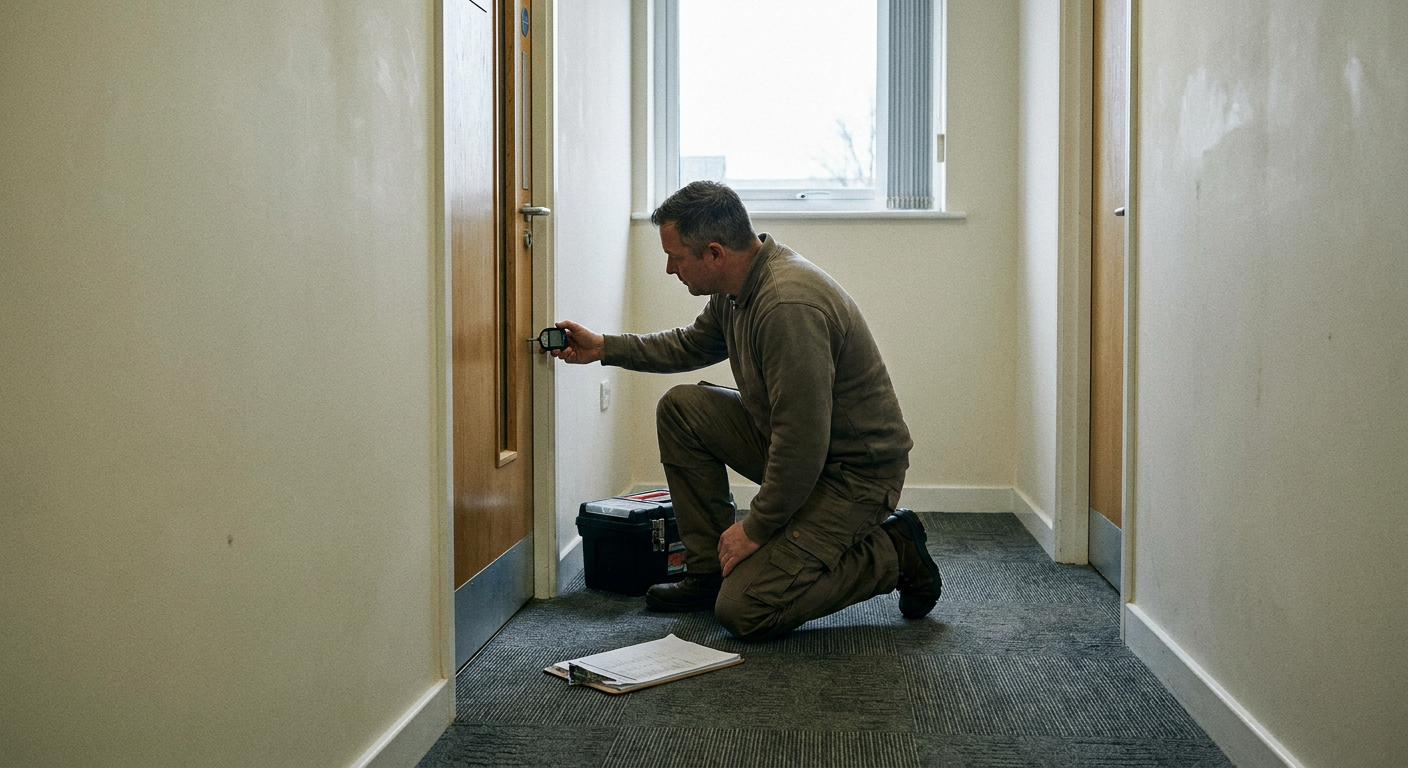
Understanding what happens during a fire assessment removes most of the worry. The assessor walks through the building methodically, looking at escape routes, doors, alarms, and anything that could fuel a fire. They check whether compartmentation holds up by examining walls, ceilings, and service risers. If the building requires a deeper look, a separate [compartmentation survey](/compartmentation-survey-maidstone) might be recommended later.
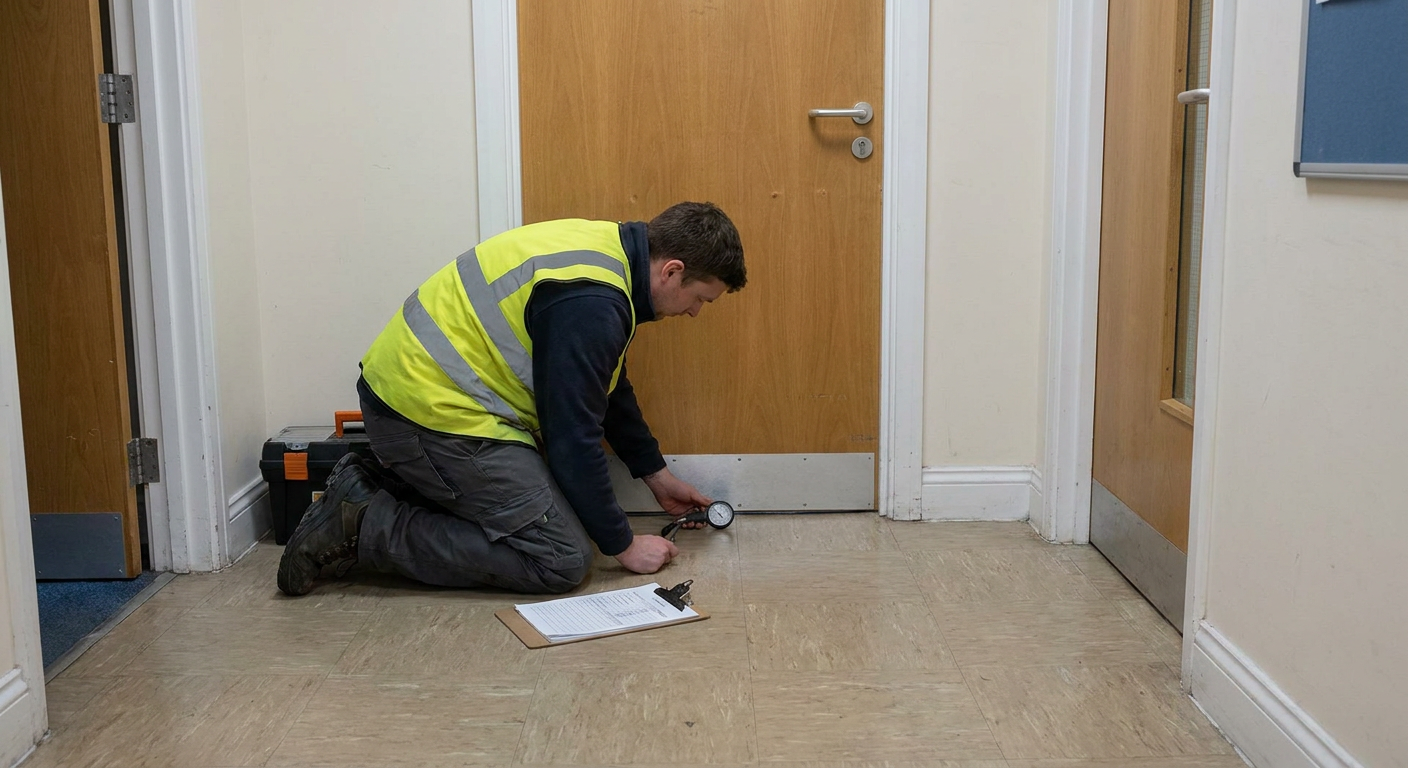
The assessor examines fire doors to see if they close fully and carry the right seals. Where faults appear, they note them down so the report can recommend a [fire door inspection](/fire-door-inspection-maidstone) if repairs are needed. They also look at portable extinguishers and alarm call points, though testing those usually falls under a different [alarm and extinguisher service](/fire-alarm-and-extinguisher-testing-advice-maidstone).
You or a nominated person should walk with them. This lets the assessor ask questions about how the building is used, where people sleep, and whether anyone inside has mobility problems that would slow an evacuation. For shared homes, the [nominated person service](/nominated-person-service-maidstone) explains who can take on that role.
How long the assessor needs on site
The time spent walking round depends entirely on the size and complexity of the building. A small shop on one of Maidstone's high streets might take forty-five minutes to an hour. The assessor checks the single escape route, the back door, the till area, and any storage room behind the counter.
A block of flats takes longer because every communal corridor, stairwell, plant room, and bin store needs attention. Expect two to three hours for a typical three-storey conversion in Barming or Grove Green. Larger blocks with multiple staircases and underground parking can take half a day.
Businesses often ask if they can keep trading while the assessment is being carried out. Yes. The assessor works around normal activity, though they may need a shop floor to be briefly quiet to hear an alarm sound test. For houses converted into flats, the process sits between the two extremes, usually lasting around ninety minutes.
Access to flats, plant rooms and loft spaces
The assessor must see the whole building to produce a reliable report. In a block of flats, this means entering communal plant rooms, boiler cupboards, and roof voids. They need to check that fire stopping remains intact where pipes and cables pass through walls.
Getting inside individual flats is a common concern. The assessor does not need to enter every private dwelling unless the building is a licensed HMO, where bedroom doors and escape windows form part of the check. Read the [HMO landlord guide](/hmo-licence-fire-conditions) for specifics. For standard blocks, sampling a few flats is normal practice to verify that front doors are adequate fire doors and that residents have not blocked internal corridors.
Loft spaces matter too. A recent [loft conversion](/latest/loft-conversion-fire-safety-stairs-doors-and-alarms) changes the escape route entirely, so the assessor will want to see the hatch, the boarding, and any structural timber near chimneys. Make sure keys to padlocked cupboards and roof hatches are to hand on the day.
Who needs to be there and what to have ready
Someone who knows the building must be present. For a family home, that is you. For rented accommodation, it might be the landlord or a managing agent. If you run a business, the person responsible for health and safety should attend, or a manager who holds the keys.
Have maintenance records available. The assessor will ask to see alarm test logs, emergency lighting certificates, and proof of recent electrical checks. If you lack these documents, the [fire safety policy page](/fire-safety-policy-and-procedures-maidstone) explains what paperwork you should keep going forward.
Keys are essential. Bring them for every locked room: electrical cupboards, bin stores, roof hatches, and basement doors. If the building uses a fob system, have a spare fob ready. Wasting twenty minutes searching for a caretaker delays the entire appointment. For properties outside the town centre, such as those in Aylesford or Burham, confirm the exact entrance the assessor should use, since rural sites often have multiple access points.
When the report arrives and what it contains
After the visit, the specialist firm writes up their findings. The fire risk assessment report timescale is typically five to ten working days, depending on the building's size and how many hazards were found. You receive a bound document, usually sent as a PDF first, followed by a printed copy if requested.
The report opens with a description of the building and the people who use it. It then lists every hazard identified, from missing fire door seals to overloaded extension leads in a kitchen. Each finding carries a risk rating and a recommendation. The recommendations are ordered by priority, telling you exactly what to fix first and what can wait until the next scheduled review.
If the building needs a formal [fire strategy](/fire-strategy-maidstone) because of recent alterations, the report will say so. It may also suggest arranging [staff awareness training](/fire-safety-awareness-training-maidstone) or updating your [evacuation plan](/fire-evacuation-plans-maidstone). Every action point includes enough detail for a contractor to quote for the work without needing another visit.
Questions about arranging your assessment
Answers to the things landlords, homeowners, and business managers in Maidstone ask most often before booking.
Can a business keep trading while the assessment happens?
Yes. The assessor works around staff and customers. They may ask for brief quiet moments to test alarms, but daily operations continue normally throughout the visit.
Will the report set out what to fix and in what order?
Yes. Every hazard receives a priority rating. The report lists actions starting with the most urgent, giving clear instructions on what needs doing immediately and what can wait.
How soon after the visit does the report arrive?
Most reports are delivered within five to ten working days. Complex buildings with many findings may take slightly longer, but the firm confirms the expected date when the visit ends.
How often should the assessment be reviewed once done?
Reviews depend on the building type and use. Flats typically need an annual check, while low-risk offices might stretch to every three years. Read the [review frequency guide](/the-law/how-often-to-review) for specifics.
Will the assessor need to get inside flats and loft spaces?
They need access to all communal areas, plant rooms, and roof voids. Individual flats are sampled rather than entered exhaustively, unless the building operates as a licensed HMO.
What information should I gather before making an enquiry?
Have the full address, building type, number of storeys, and reason for the assessment ready. Mention any recent alterations, council letters, or known faults with doors and alarms.
Who needs to be available on the day of the visit?
The responsible person or someone holding all keys must attend. They need to answer questions about building use, provide maintenance logs, and unlock every cupboard, roof hatch, and plant room.
How long does the walk-round take for different buildings?
A small shop takes under an hour. A three-storey block of flats usually requires two to three hours. Large complexes with multiple stairs and basements can take half a working day.
Arrange your assessment in Maidstone
Send your building details through the form. The specialist firm reviews them and replies with available dates. Enquiring does not commit you to booking or paying anything upfront.
- No obligation to proceed
- Local firms only
- Clear pricing upfront