Guides
Fire risk management guides for Maidstone buildings
Read about fire risk assessments, door inspections, alarms and the duties that fall to owners, landlords and managers in Maidstone. Each guide explains what a specialist looks for and what the law requires.
Assessments for homes, flats and shared buildings
A fire risk assessment is the starting point for any building where people live or work. The specialist walks through the home or block of flats, notes how a fire could start, checks whether people can get out safely and writes down what needs fixing.
For houses in multiple occupation, the landlord carries legal duties that go beyond a standard domestic setup. The HMO fire risk assessment guide sets out exactly what those obligations are and how the specialist records them. Student accommodation follows similar rules, because shared kitchens and corridors create extra risks that do not exist in a single family home.
The cost and coverage page explains what the assessment includes, so you know what to expect before anyone arrives. Arranging one is straightforward once you understand what the responsible person must provide. That role falls to whoever controls the building, usually the owner, the managing agent or the landlord.
Doors, walls and stopping the spread of fire
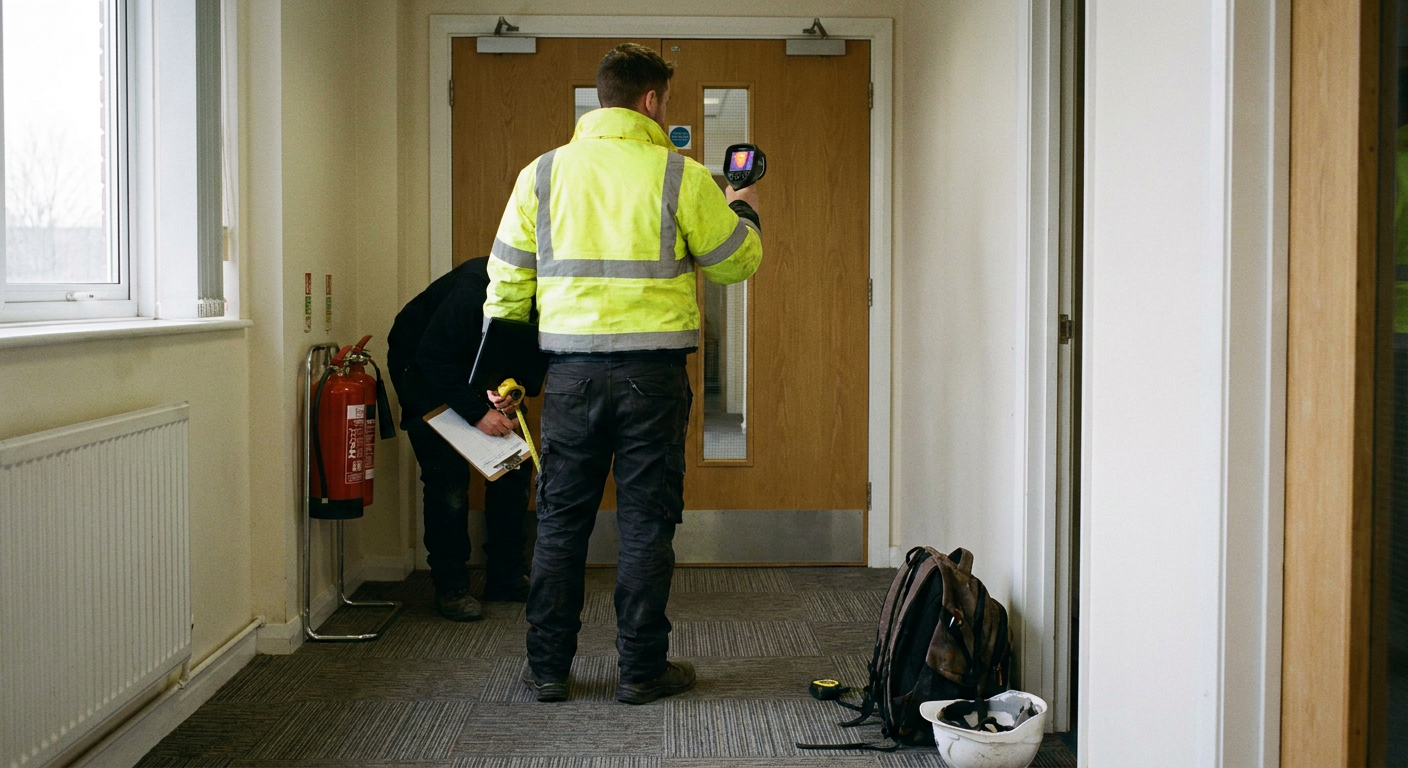
Fire doors only work if they close properly and sit in their frames without gaps. A specialist inspects the seals, hinges, closers and glazing to confirm each door will hold back smoke and flame long enough for people to leave. The fire door inspection page details every check carried out during a visit.
Compartmentation matters just as much. Walls, floors and ceilings divide a building into sections so fire stays contained. Over time, pipes, cables and renovation work punch holes through those barriers. A compartmentation survey finds every breach and tells the contractor exactly what to seal.
New builds and major alterations need a fire strategy report from the start. This document dictates where walls go, which doors carry a fire rating and how alarms link together. Without it, the building control sign off cannot happen. The fire strategy page covers what goes into that report and who produces it.
Alarms, extinguishers and testing routines
False alarms cause real problems in blocks of flats. Residents stop reacting when the panel sounds every week because of burnt toast or steam from a shower. The guide on reducing false alarms explains how specialists adjust detector types and positions so the system only triggers for genuine smoke.
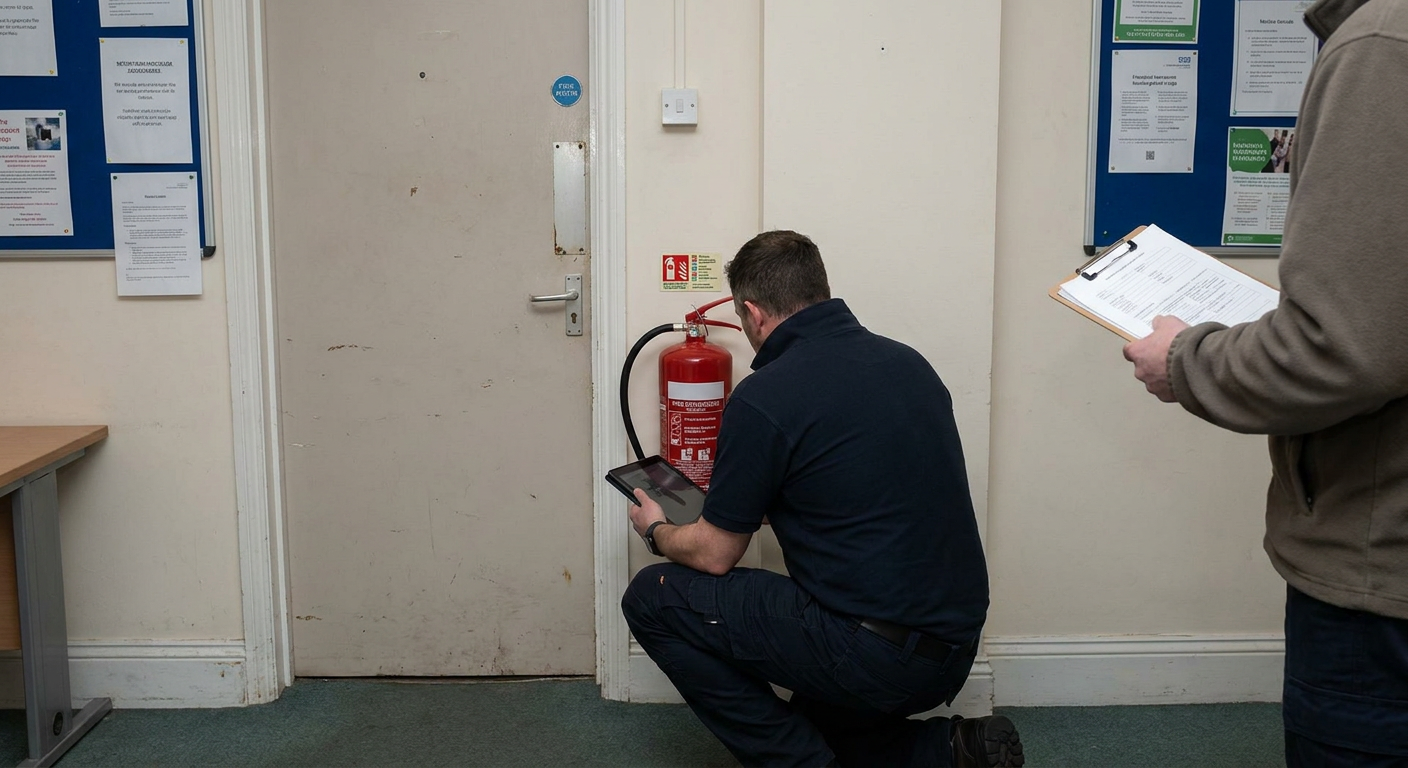
Extinguishers and alarm panels need regular attention too. The testing advice page outlines what a competent person checks during a service visit, from pressure gauges on extinguishers to battery backups on alarm panels. Skipping these checks leaves equipment useless at the exact moment someone needs it.
Winter brings its own hazards. Portable heaters plugged into overloaded extension leads start fires in flats every year. The winter fire risks guide explains what tenants should avoid and what landlords must warn them about before the cold weather arrives.
Plans, training and written procedures
An evacuation plan maps the escape routes and tells residents where to gather outside. In a small house the route is obvious, but in a converted building with shared corridors, people need clear instructions. The [evacuation plan page](/fire-evacuation-plans-maidstone) shows how a specialist drafts these documents and runs practice drills.
Staff in commercial premises need fire safety awareness training so they recognise hazards and know how to raise the alarm. Wardens require deeper instruction because they take charge during an evacuation. The [warden training guide](/fire-warden-training-maidstone) lists the specific duties they learn, from sweeping rooms to calling the fire service.
Every building needs a written fire safety policy. This document records who does what, when checks happen and where the logs are kept. The [policy and procedures page](/fire-safety-policy-and-procedures-maidstone) explains how to put one together. For buildings where no single person wants the responsibility, a [nominated person service](/nominated-person-service-maidstone) assigns someone holding a recognised fire safety qualification, such as a NEBOSH certificate or equivalent accreditation, to manage the day to day tasks.
Letters from the council and changing the layout
A letter from the council or the fire service means something about your home has been flagged. It might follow an inspection, a complaint from a neighbour or a licensing review. The [guide on council letters](/the-law/council-or-fire-service-letter) explains what the notice demands and the deadline attached to it. Converting a house into flats changes the fire risk entirely. What was a single dwelling becomes several separate homes sharing a staircase and a front door. The [conversion guide](/latest/converting-a-house-into-flats-in-maidstone-fire-safety) covers the new requirements for detection, separation and escape routes that apply once the work is finished. Adding a habitable room at the top of a house means the stairs below must be protected, and the new room needs its own escape window or direct access to a safe route. The [loft conversion guide](/latest/loft-conversion-fire-safety-stairs-doors-and-alarms) details what building control expects before approving the space.
Areas covered around Maidstone
Fire risk management applies across the whole borough, but the type of building changes from place to place. Larkfield has a mix of post war housing and newer estates. Aylesford holds older stock alongside recent developments near the river. Walderslade sits on higher ground with larger detached homes and some converted properties.
Barming contains Victorian terraces, modern flats and houses in multiple occupation that need specific attention. Grove Green is largely residential, built over the last few decades, while Burham remains a smaller village where period homes present different challenges to assessors.
Each area page explains what the local building stock means for fire safety and links directly to the relevant assessment or inspection service. The full areas page lists every suburb and village where specialists take bookings.
Ask about fire safety in your home
Send an enquiry about your building. A specialist firm will reply with what they recommend. You are free to decline or ask questions first.
- No obligation to proceed
- Local specialists only
- Plain answers given