Fire Risk Assessment
Fire risk assessment, Maidstone
A fire risk assessment in Maidstone starts with a walk through your building and ends with a written record of what needs attention. Send the details below to get a price from a specialist firm. Nothing is charged for using this page.
- No fee to send an enquiry
- Written report included
- Covers flats, houses and HMOs
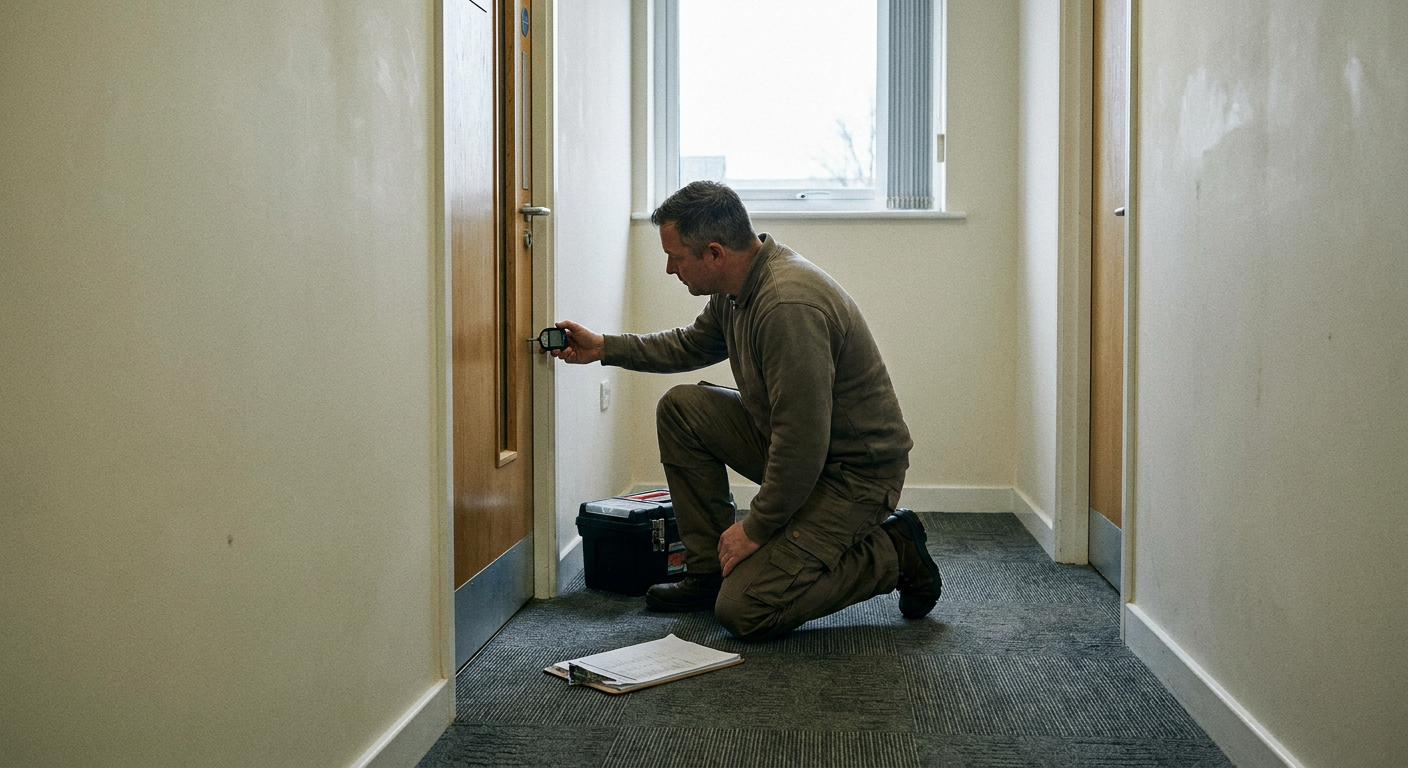
Request a price for your home
What happens on the day
What the assessor walks and records in your building
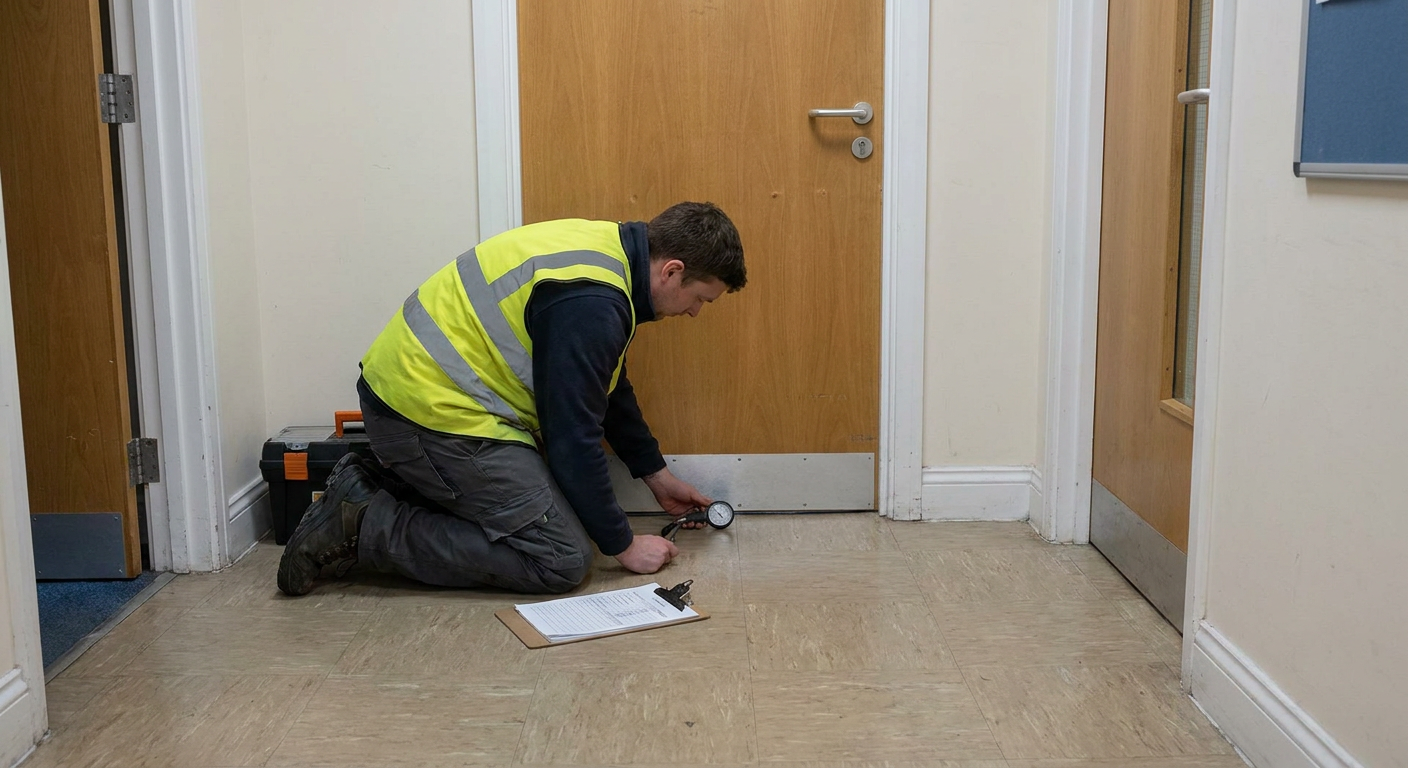
- Communal areas and escape routes
- Stairwells, corridors, lobbies and final exits are checked for obstructions, damaged finishes and whether doors close properly onto their frames.
- Fire detection and alarms
- Smoke detectors, heat alarms, call points and panels are looked at to confirm they are present, sited correctly and show signs of regular testing.
- Compartmentation basics
- Walls, floors and ceilings separating flats or rooms are examined where visible, noting gaps around pipes or cables that could let smoke pass through.
- Emergency lighting and signage
- Exit signs and backup lights along the escape route are checked so occupants can find their way out if the main power fails during a fire.
From uncertainty to a written record
Every assessment follows the same pattern: a building is walked, hazards are noted, and a document is produced setting out what was found and what should happen next.
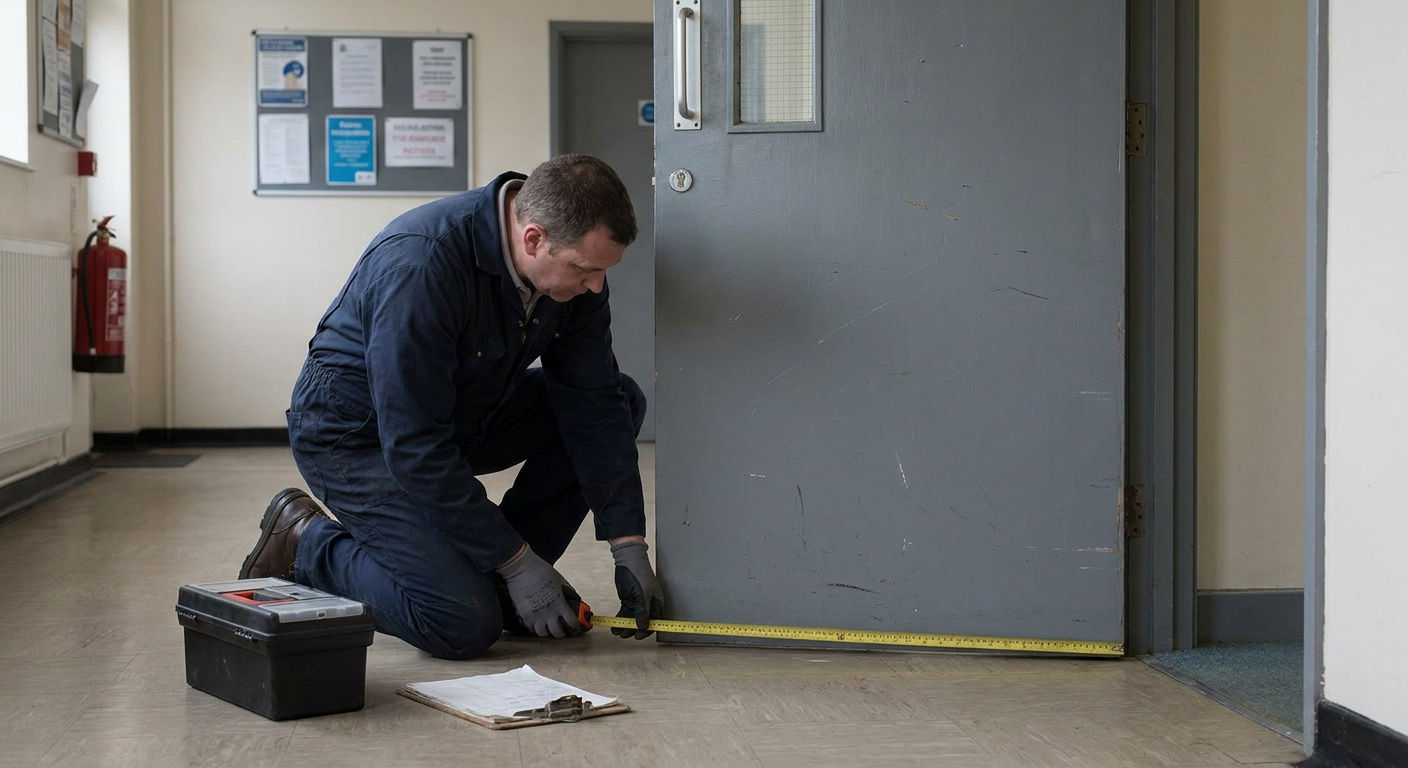
Before the visit
A landlord or homeowner has noticed a letter from the council, a tenant query or simply realises no record exists showing the building has been checked for fire safety.
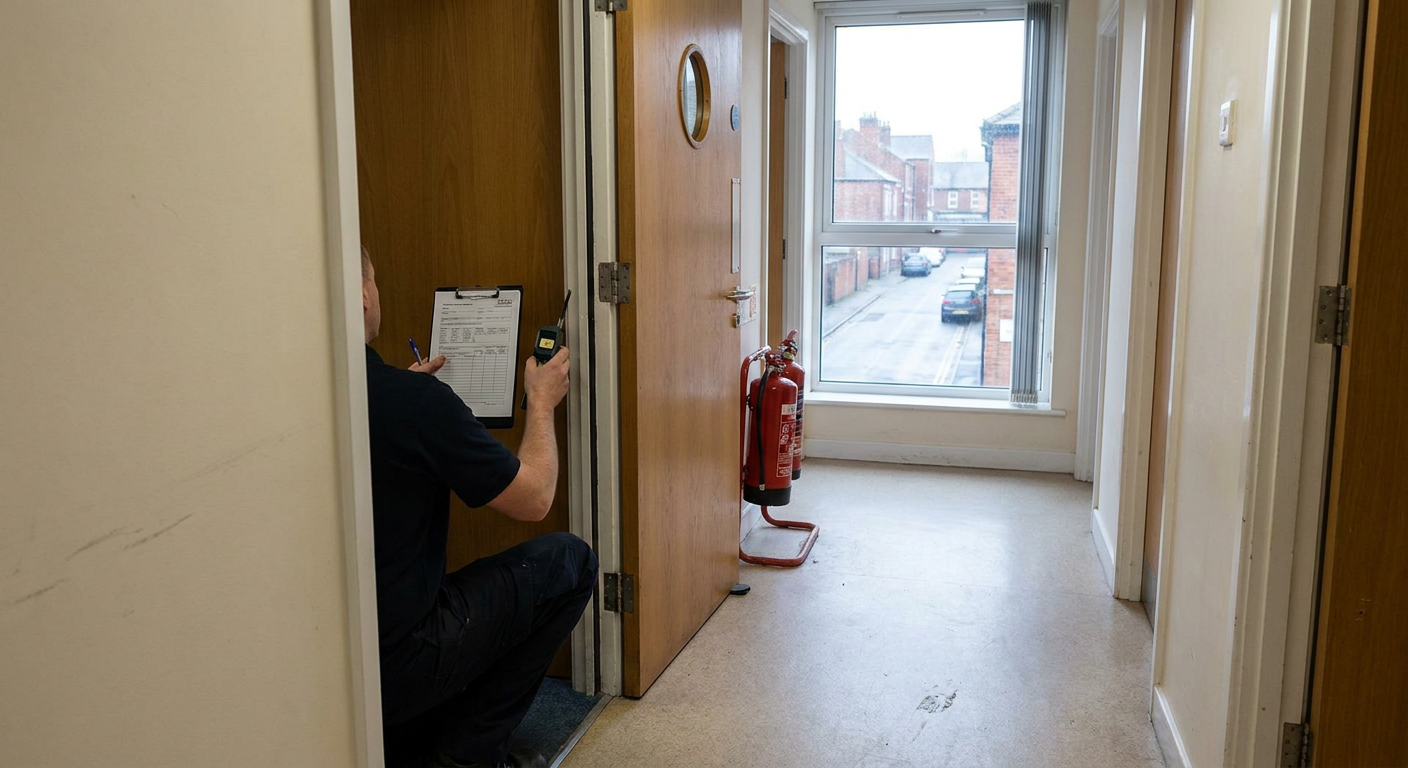
After the report is issued
A written assessment sits on file, listing the hazards found, the actions recommended and the date by which the next review should take place.
Common questions
Questions about arranging an assessment
Costs depend on the number of flats, storeys and access requirements. A block of six flats in Maidstone will be priced once the specialist firm knows the layout. There is no charge to send an enquiry here.
Availability depends on the firm's diary. The visit itself usually takes between one and three hours for a small block, longer for bigger buildings or those with complex layouts.
A type 1 assessment looks at communal parts only, which satisfies most landlord fire assessment requirements. If walls need opening up to check hidden compartmentation, the report will say so.
For blocks of flats, access inside individual dwellings is not normally required for a type 1 fire assessment. Communal corridors, stairways, risers and plant rooms are the focus.
How often you review a fire assessment depends on changes to the building or its use. Annual reviews are common for rented flats, though the report will state the recommended interval.
Sending an enquiry through this site costs nothing. Once submitted, a specialist firm covering Kent reads the details and contacts you directly to discuss the work and agree a price.
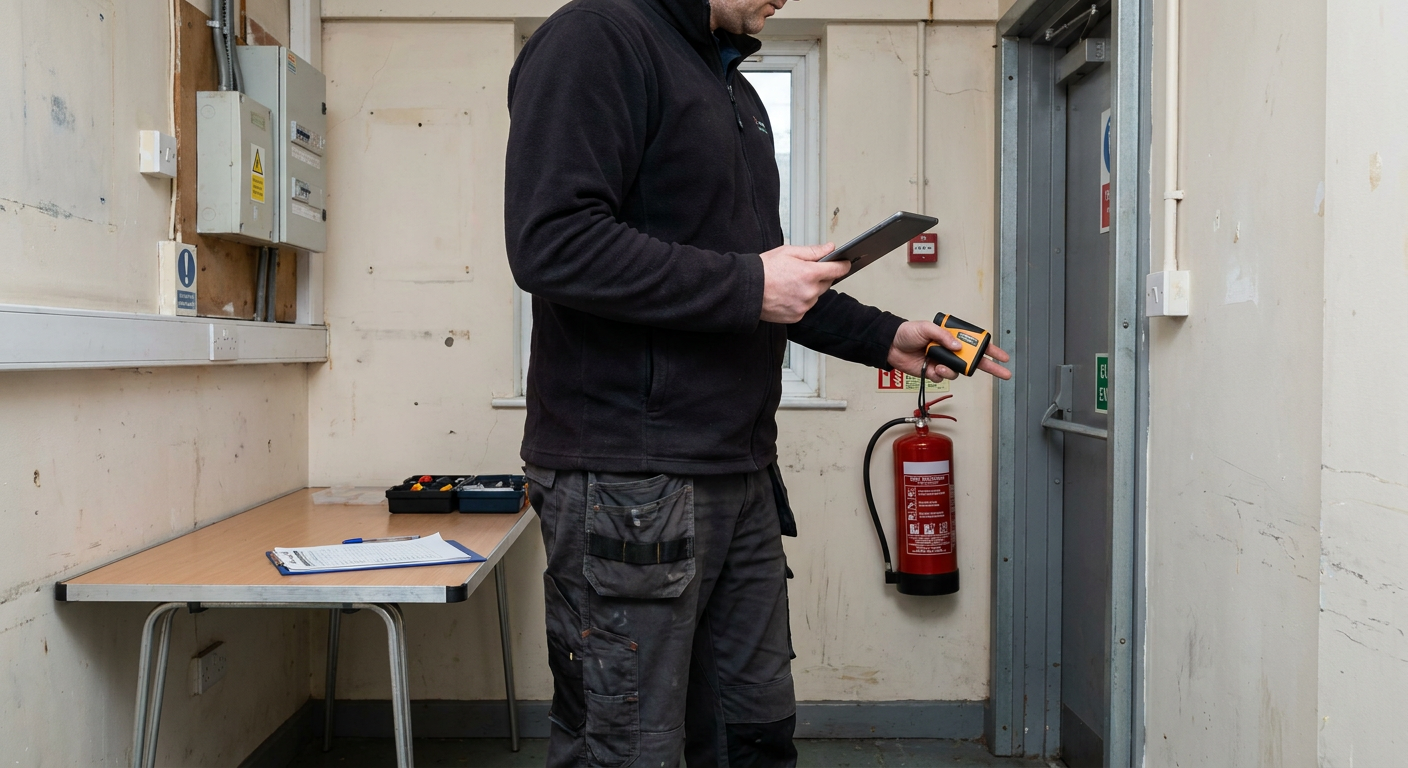
What the written assessment contains
The finished document records what the assessor saw, judges the level of risk based on that evidence, and sets out actions with priorities so anyone reading it knows what to do next.
- Recorded findings
- A list of hazards spotted during the walk, from blocked exits to missing fire door seals, each tied to its exact location in the building.
- Action plan
- Recommended steps ranked by urgency, showing what needs doing immediately, what can wait and what is already satisfactory.
- Review date
- The point at which the assessment should be looked at again, based on the building type, occupancy and any planned alterations.
Areas covered around Maidstone
Specialist firms taking enquiries through this site cover Maidstone and the surrounding villages. Whether the building is in the town centre or further out, the form reaches assessors working across the area.
If your village is not listed, send an enquiry anyway. Firms often travel further than the names shown here.
Arrange your fire risk assessment
Fill in the short form to describe the building. A specialist firm will read the details and reply with availability and a price for the work.