Guide
Kitchen fire safety in Maidstone pubs and restaurants
Cooking oils, grease buildup and extraction ducts create specific hazards in commercial kitchens. Find out what checks matter for pubs and restaurants in Maidstone, how staff habits affect risk, and when to arrange a professional assessment.
Why commercial kitchens carry higher fire risk
A pub or restaurant kitchen contains things that burn readily and things that make them burn faster. Cooking oils reach temperatures well above their ignition point. Gas hobs produce open flames next to paper tickets and dry cloths. Electrical equipment runs for long hours under heavy loads.
In Maidstone, many kitchens sit inside older buildings where the original layout was never designed for modern catering equipment. Tight spaces mean heat builds up faster and escape routes are shorter. The person responsible for fire safety in the building needs to understand these specific conditions rather than relying on generic advice. A [fire risk assessment](/fire-risk-assessment-maidstone) looks at the kitchen as part of the whole premises, checking how a fire starting behind the stoves might spread into the dining room or the floors above.
Managing cooking oils and deep fat fryers
Chip pans and deep fat fryers cause more kitchen fires than any other single appliance. Oil heats quickly and can ignite without warning if the thermostat fails or someone leaves it unattended. Even after the heat is turned off, the oil stays hot enough to catch for a long time.
Staff need to know exactly what to do if a pan catches fire. Water makes an oil fire worse, spreading burning liquid across the floor. A wet chemical extinguisher or a fire blanket is the right response, but only if someone has been shown how to use one safely. Arranging [fire safety awareness training](/fire-safety-awareness-training-maidstone) gives kitchen workers the chance to practice these steps before an emergency happens. Training covers which extinguisher suits which type of fire, so nobody reaches for a water unit near a fryer.
Extraction ducting and grease buildup
The canopy hood above the cookers pulls steam, smoke and grease particles out of the kitchen. Those particles settle inside the ductwork. Over weeks, a thick layer of grease coats the metal interior. If a flame flares up from a grill or a pan, the extraction system can pull that fire directly into the ducting and carry it through the building.
Cleaning the filters every day is a basic habit, but the ducts themselves need professional attention at set intervals. How often depends on how much frying and grilling the kitchen does. A busy chip shop needs cleaning far more frequently than a cafe serving sandwiches. The specialist who inspects the ducting will measure the grease deposits and advise on a schedule. This work forms part of the wider [health and safety report](/health-and-safety-reports-maidstone) that the premises should hold and update regularly.
Compartmentation between kitchen and dining areas
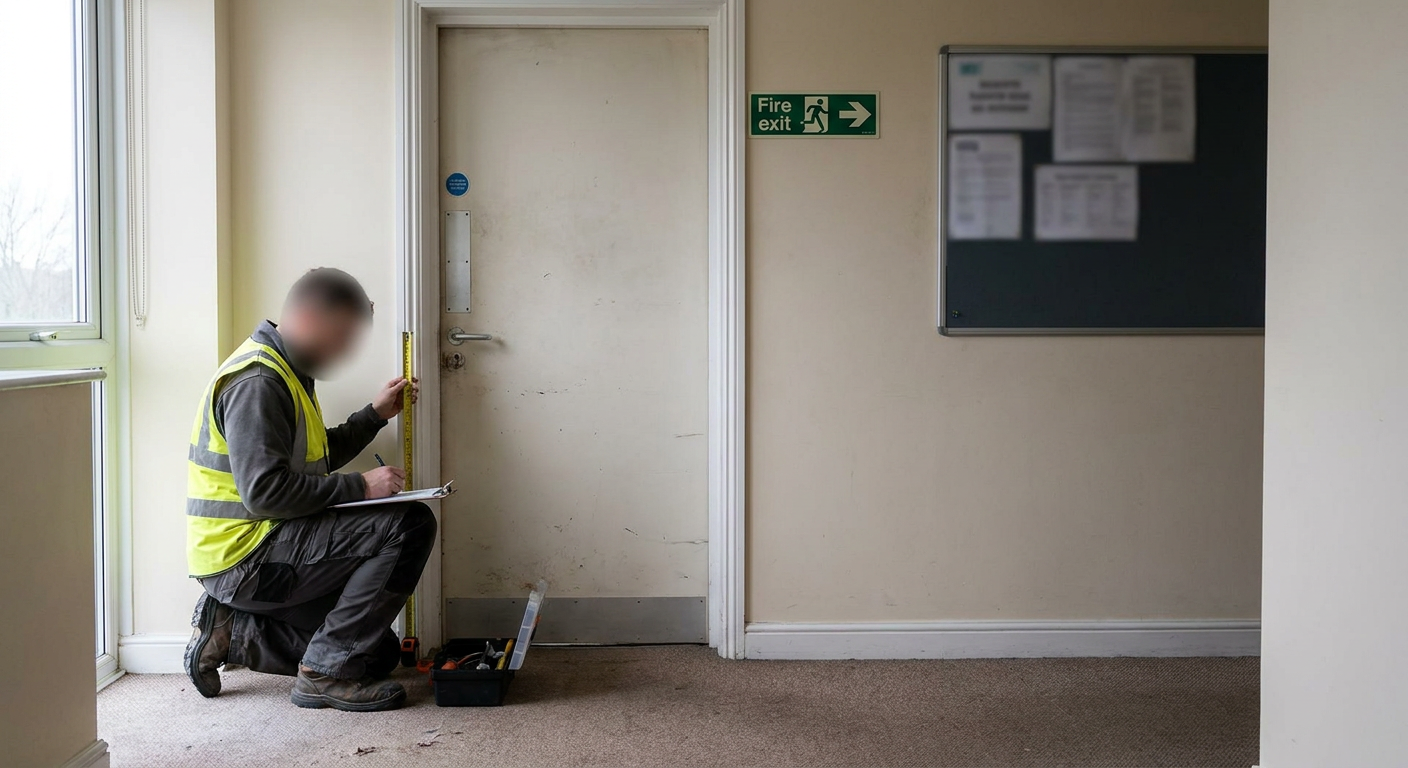
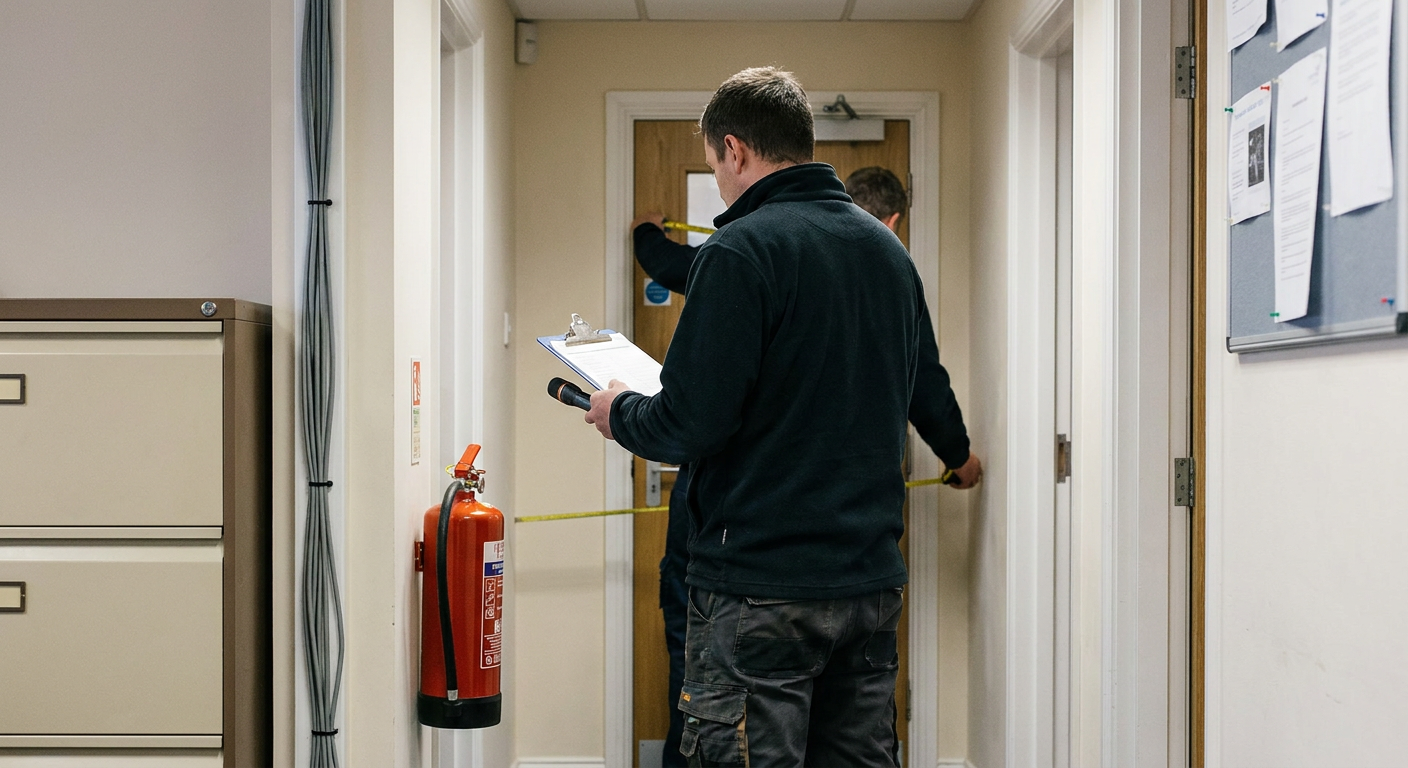
A commercial kitchen should be separated from the rest of the building by walls and doors that resist fire long enough for people to get out. This separation is called compartmentation. Even a small hole allows smoke and heat to bypass the barrier. A [compartmentation survey](/compartmentation-survey-maidstone) identifies every penetration and checks whether the seals are intact. The specialist examines the fire doors between the kitchen and the corridor. These doors take a beating from trolleys and foot traffic, so their hinges, seals and closing mechanisms wear out faster than those in an office. Regular [fire door inspections](/fire-door-inspection-maidstone) catch warped frames and broken closers before they fail during a real fire.
Staff routines that prevent fires
Equipment matters, but daily habits determine whether a kitchen stays safe. Leaving cardboard boxes stacked near ovens, draping tea towels over hot surfaces, or overloading extension leads with high-draw appliances all create immediate danger. The busiest times, such as Friday night service, are when shortcuts happen and risks multiply.
Written procedures help because they set a standard that every shift follows. A [fire safety policy](/fire-safety-policy-and-procedures-maidstone) documents how the kitchen should be shut down at the end of the night, who checks that gas valves are closed, and where waste is stored until collection. It removes guesswork. When new staff start, the policy gives them something concrete to read rather than relying entirely on verbal instructions passed down from whoever happens to be working that day.
Planning the escape route from a working kitchen
Kitchens are noisy, full of steam and often have only one or two exits. If a fire starts near the main door, staff need a second way out that is not blocked by deliveries or stacked crates. The escape route must lead somewhere safe outside the building, not just into another room that fills with smoke.
An [evacuation plan](/fire-evacuation-plans-maidstone) maps these routes and sets out who calls the fire service, who checks the toilets and where everyone gathers once outside. For pubs with flats above, the plan must account for residents who may not hear kitchen alarms. Testing the alarm system and the extinguishers on a set schedule ensures everything works when needed. Advice on [alarm and extinguisher testing](/fire-alarm-and-extinguisher-testing-advice-maidstone) covers the frequency and the records required.
Ask about your kitchen fire safety
Send details about your premises and the specific concerns you have. A specialist firm will review the information and explain what type of assessment or inspection fits your situation. There is no obligation to proceed.
- No obligation to book
- Clear next steps
- Local specialists